

The reliable way to organize litigation case files with AI is to build a sound human file structure first, then layer AI on top of it for categorization, search, and summarization. Centralize every document into one matter-based repository, let AI tag and index the file at a granular level, and use natural-language search to pull any fact back out in seconds. At DocuLex, we built the platform to process the file the way a litigator actually reads it, depositions page by page and medical records visit by visit, so the goal is never just storage. The goal is a file where every page is retrievable, summarizable, and ready to draft from.
This guide walks through the method stage by stage. It is written for solo and small-to-mid-size personal injury and civil litigation firms where one or two people are buried in medical records and discovery documents and want a system they can actually repeat.
Why litigation files end up scattered in the first place
Most small firms are litigating actively while still organizing cases with generic folders, email attachments, and PDFs spread across drives. The tooling gap is real. In the ABA’s 2024 survey, only 27% of solo attorneys and 38% of firms with 2 to 9 lawyers reported access to litigation support software, and only 31% of respondents personally used it. Cloud adoption is widespread, with about 75% of attorneys using cloud computing for work, but office use of AI-based tools sat at 30.2% overall and fell to 17.7% among solos. You can read the ABA’s findings in its 2024 Solo and Small Firm TechReport.
The cost of that gap is time. McKinsey has found that knowledge workers spend roughly a fifth of the workweek, about one full day, searching for and gathering information. That figure comes from general knowledge work rather than law firms specifically, but the search burden it describes is familiar to anyone who has lost an afternoon hunting for the right version of a medical record.
The fix is not a complex enterprise rollout. A clear, repeatable method, with AI doing the heavy lifting on tagging and retrieval, closes the gap without a litigation support department.
Stage 1: Centralize every case file into one matter-based repository
Before any AI touches the file, get everything into one place, organized by matter. One case, one file. This is the oldest principle in legal file management and it still holds.
The ABA’s case-file standard describes what a complete file looks like: a record of all material facts and transactions, a detailed chronological record of work done, pleadings and correspondence and research organized systematically for ready reference, and a task plan with a timetable of deadlines including any statute of limitations. The standard treats organization as a competence and risk-management control, not a cosmetic nicety. You can review the structure in ABA Standard 5.5 on Case Files.
In practice, centralizing means:
- One repository per matter. Pleadings, correspondence, discovery, medical records, expert materials, and work product all live under the same case, not scattered across inboxes and desktops.
- A consistent intake habit. Every document that arrives gets filed the same way, the same day, by whoever receives it.
- A digital-first file. Electronic-only files are ethically workable. An Oregon State Bar ethics opinion concluded there is no prohibition on maintaining the client file solely in electronic form, provided the firm protects security and availability and does not destroy intrinsically significant originals without client consent. The full reasoning is in Oregon Formal Opinion 2016-191.
This centralized, matter-based file is the foundation. Everything AI does well downstream depends on the file being complete and in one place. A platform built for litigation document management gives you that single secure location, and it is the layer the rest of this method sits on.
Stage 2: Use AI to categorize and tag the file
Once the file is centralized, the next job is classification: sorting documents by type, party, date, and relevance so the file becomes navigable instead of a long undifferentiated list. This is where AI starts to save real hours.
Good categorization depends on consistent inputs, which is why naming conventions matter more than they seem. Records-management guidance hosted by the National Archives recommends filenames that are human-readable, consistent, sortable, and meaningful even outside their folder, and specifically suggests leading with dates in YYYYMMDD format when chronological order matters. You can see the full guidance in the federal file-naming best practices. When incoming documents follow predictable dates and document types, AI tagging is far more reliable.
On top of that foundation, AI handles the categorization work that paralegals otherwise do by hand:
- Reading each document and assigning intelligent tags by type and content.
- Grouping records by provider, party, or case phase.
- Building a chronology automatically from dated documents.
The reliability of this step improves dramatically when the AI processes the file in small, structured pieces rather than swallowing a 900-page PDF whole. This is the approach we take at DocuLex. Depositions are processed page by page and medical records visit by visit, so each tag and summary traces back to a specific, checkable part of the record. Grounding the model in the actual file, rather than an open-ended prompt, is what makes the output usable. A 2026 randomized controlled trial published through the University of Minnesota Law School found that a retrieval-augmented legal AI tool produced significant productivity gains across five of six tasks and did so without introducing more hallucinations than the control. The study and its method are described in the University of Minnesota’s AI-powered lawyering research.
Stage 3: Build a searchable layer over the file
A tagged file is useful. A searchable file changes how you work. The point of organizing with AI is that you can ask the file a question and get an answer with a citation back to the source page, rather than scrolling.
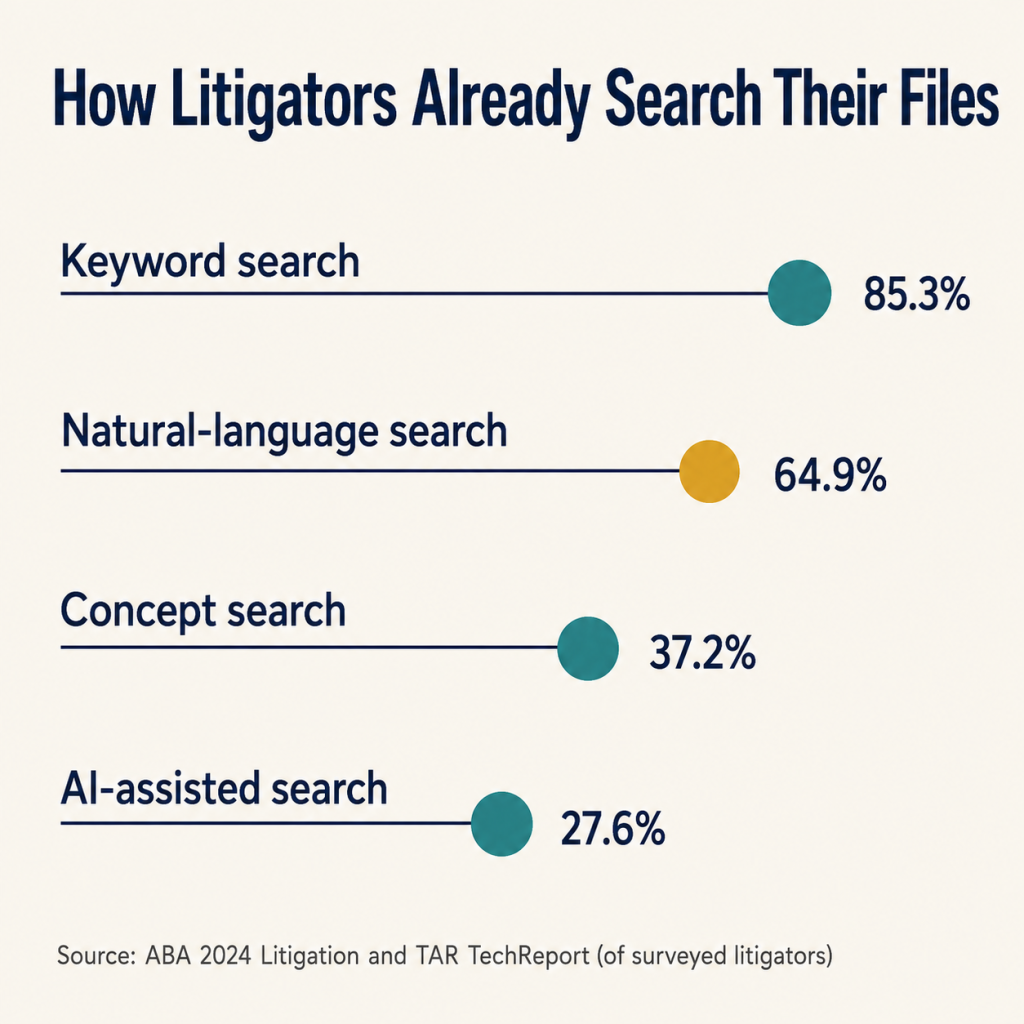
Advanced search is already standard in litigation practice. In the ABA’s 2024 litigation survey, keyword search remained most common at 85.3%, but natural-language search was used 64.9% of the time, with concept search at 37.2% and AI-assisted search at 27.6%. Search is no longer a future feature. It is how litigators already work, especially under deadline pressure.
There are two layers worth building:
| Search layer | What it does | Best for |
| Indexed full-text and tag search | Finds documents by keyword, type, date, party, or tag | Locating a specific exhibit, pleading, or bill quickly |
| Natural-language retrieval | Answers a plain-English question by pulling relevant passages from the file | “What did Dr. Reyes diagnose on the second visit?” or “List every treatment gap over 30 days” |
The natural-language layer is where a legal AI chatbot earns its place. Instead of remembering where a fact lives, you ask, and the system returns the answer along with the underlying record so you can verify it. That verification step is not optional, which the next stage covers.
Stage 4: Process and organize medical records safely
For personal injury files, medical records are the hardest part of the job. They arrive in large, inconsistent batches, often hundreds of pages per provider, and someone has to turn them into a usable chronology, a billing summary, and a clear treatment narrative.
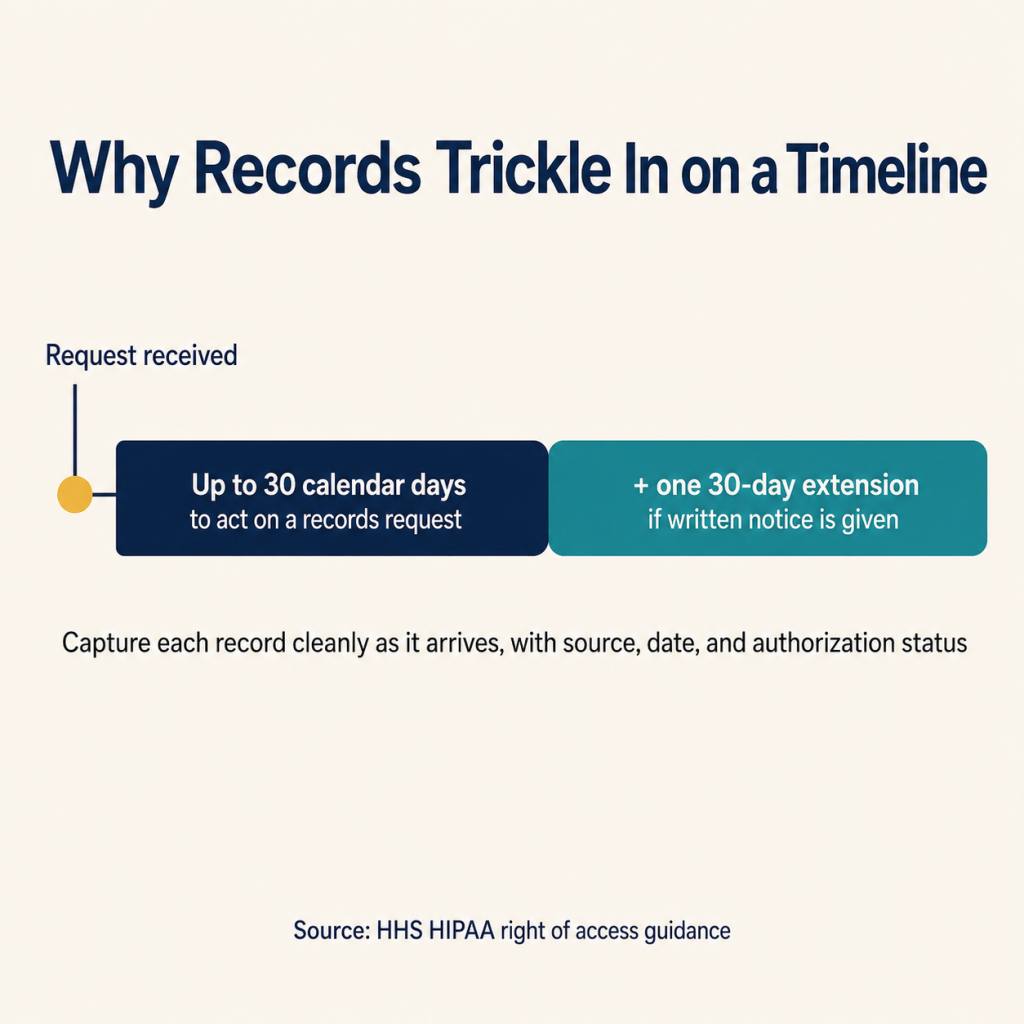
AI is well suited to this when it works on records the firm already has, processing them visit by visit into provider-organized summaries, billing breakdowns, and timelines. This is post-retrieval organizing. It does not replace requesting records from providers, and it is worth understanding why intake timing matters: under HHS guidance, a covered entity generally has up to 30 calendar days to act on a records request, with one possible 30-day extension. Because records trickle in on that kind of timeline, capturing each one cleanly as it arrives, with source, date, and authorization status, keeps the chronology accurate. HHS explains the access-and-transmission rules in its HIPAA right of access guidance.
Handling medical records also raises security obligations that go beyond “we use a secure cloud.” HIPAA’s Security Rule is built around administrative, physical, and technical safeguards tied to a documented risk analysis, covering access controls, audit controls, authentication, and transmission security. HHS summarizes those requirements in its HIPAA Security Rule overview. When a workflow involves a vendor that stores or processes protected health information on behalf of a covered entity or business associate, a Business Associate Agreement is required.
At DocuLex, we designed the medical-records workflow around these requirements: HIPAA-compliant processing on AWS infrastructure with SSE-KMS encryption, a Business Associate Agreement with our AI provider, and no retention of medical information after analysis. The detail of how that works lives on our data security page, and the broader medical workflow on our AI medical records processing for attorneys page. The point for this guide is narrower: any AI workflow touching PHI has to be designed for confidentiality and auditability from the start, not bolted on later.
Stage 5: Verify AI output and keep the file current
AI organizing is an assistant, not an authority. The lawyer still owns accuracy. Two habits make the difference between a file you trust and one that quietly drifts.
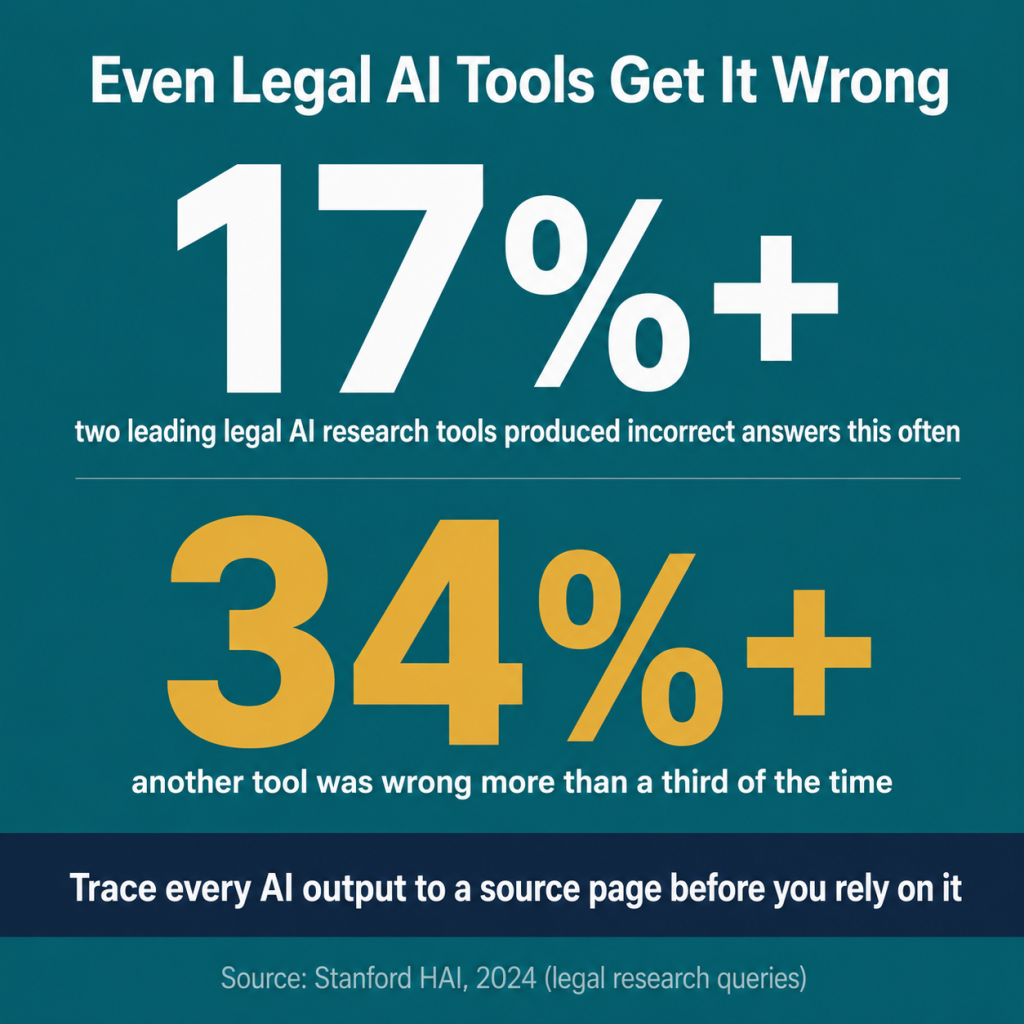
Verify before you rely. Hallucination risk is real even in legal-specific tools. A 2024 Stanford study found that leading AI legal research tools still produced incorrect information at meaningful rates, with two tools wrong more than 17% of the time and another more than 34% of the time. The study and its methodology are summarized by Stanford HAI. Grounding the model in your own file reduces this risk, but it does not remove the duty to check. NIST’s guidance on generative AI similarly treats confidently false output as a core risk and recommends verifying sources and citations rather than trusting fluent text. The practical rule: every AI-generated tag, summary, chronology, or answer should trace back to a specific page you can open and confirm.
This is also an ethics obligation. ABA Formal Opinion 512 frames responsible AI use around competence, confidentiality, client communication, supervision, and reasonable fees. Lawyers need a working understanding of the tool’s limits, must review outputs for accuracy, and must supervise staff who use it. The ABA’s announcement covers the first formal ethics guidance on AI tools.
Maintain the structure over time. A file is not organized once. As discovery comes in, depositions are taken, and records arrive, the same intake habit applies: file it, tag it, and let the chronology update. AI-assisted maintenance keeps an active file current without a weekend of cleanup before every deadline.
Quick-start summary
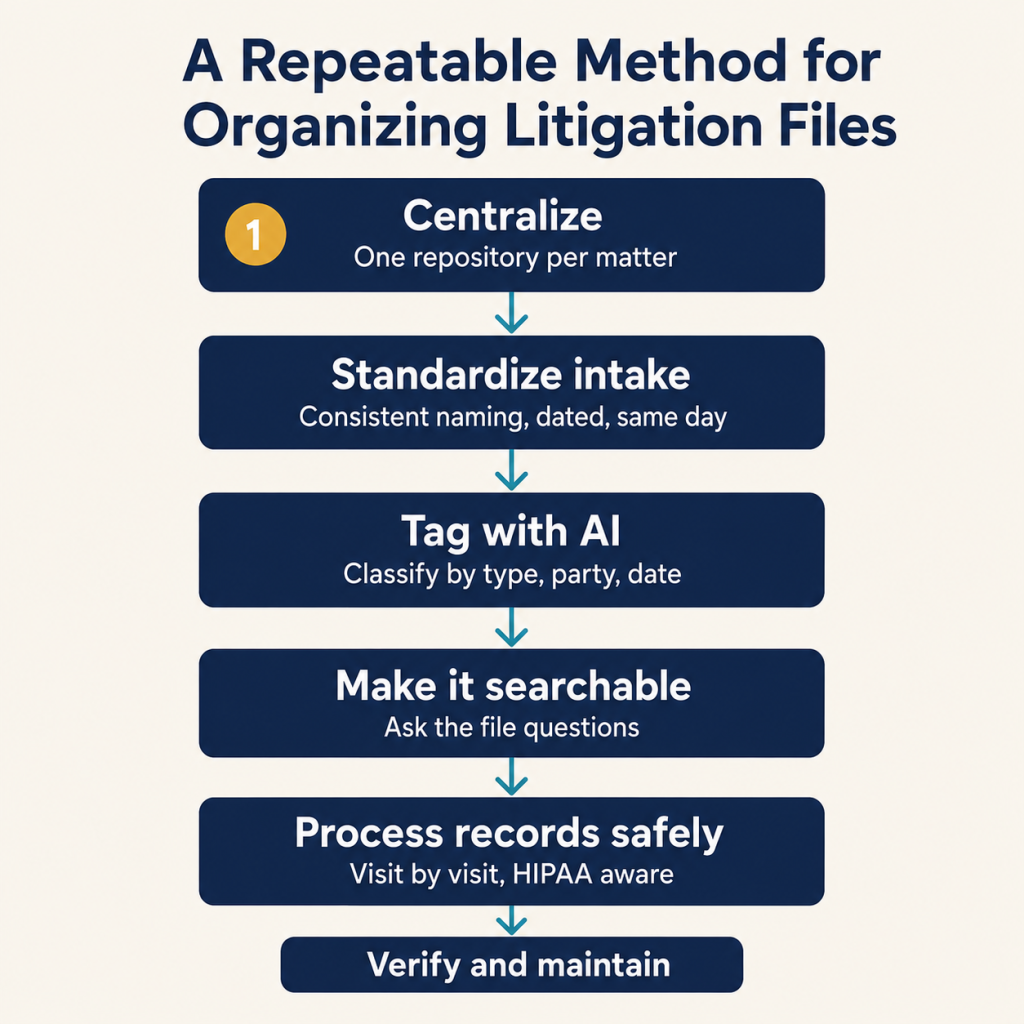
For a firm starting today, the method in order:
- Centralize. One repository per matter, everything in one place.
- Standardize intake. Consistent naming, dates in a sortable format, same-day filing.
- Tag with AI. Let the system classify by type, party, and date, processing in small pieces.
- Make it searchable. Add a natural-language layer so you can ask the file questions.
- Process records safely. Organize medical records visit by visit under a HIPAA-aware workflow.
- Verify and maintain. Trace every AI output to its source, and keep filing as the case moves.
Frequently asked questions
Is AI case file organization HIPAA compliant?
It can be, but compliance depends on the workflow and the vendor, not on the AI itself. When a tool stores or processes protected health information on behalf of a covered entity or business associate, HIPAA requires a Business Associate Agreement and the Security Rule’s administrative, physical, and technical safeguards. Look for encryption at rest and in transit, access and audit controls, a BAA covering any AI subprocessor, and a clear data-retention policy.
Can AI organize medical records the firm has not received yet?
No. AI organizing tools work on records already in the file. They process and summarize documents you have, turning them into chronologies and billing summaries. Requesting records from providers is a separate step, and HHS allows covered entities up to 30 calendar days, plus a possible 30-day extension, to respond to a request.
Does AI replace the paralegal who organizes the file?
No. AI handles the repetitive tagging, summarizing, and retrieval work, which frees staff for judgment-heavy tasks. The lawyer remains responsible for accuracy, and ABA Formal Opinion 512 requires supervision of anyone, human or AI-assisted, who works the file.
How accurate is AI at summarizing depositions and records?
It is accurate enough to save substantial time when it is grounded in the actual document and the output is verified, and unreliable when it is asked to generate from memory. Processing a transcript page by page, with each summary tied to a source page, is far more dependable than a single open-ended prompt over a long file.
Organize once, draft from it forever
A well-organized litigation file is the foundation that makes everything downstream faster. Demand letters, discovery responses, deposition review, and case summaries all get easier when every page is already tagged, searchable, and traceable. That is the principle we built DocuLex around, a platform created by a civil litigation attorney with more than 20 years in personal injury and complex litigation, focused on evidence organization and document automation rather than practice management. If you want to be first in line as we approach launch, join the waitlist.