

Personal injury paralegals spend a disproportionate amount of their time on tasks that don’t require their expertise. Manually building medical chronologies from thousands of pages of records. Reformatting billing data provider by provider. Drafting routine correspondence. Hunting through disorganized case files for a single document. AI is changing that by handling the repetitive data-processing layer of PI work, so paralegals can redirect their time toward case analysis, client coordination, and litigation support that actually benefits from experience.
At DocuLex.ai, our founder Jason Melancon built the platform after watching his own paralegals spend days compiling medical billing summaries and patient visit reports in his civil litigation practice. That firsthand experience is what shaped how we approach AI-powered document automation and medical records processing: the technology handles the first-pass extraction and organization, and the paralegal handles everything that requires judgment.
This article walks through the specific administrative tasks that consume the most paralegal time in personal injury practices, how AI addresses each one, and what the paralegal’s role looks like on the other side.
Where the Administrative Burden Sits in PI Practices
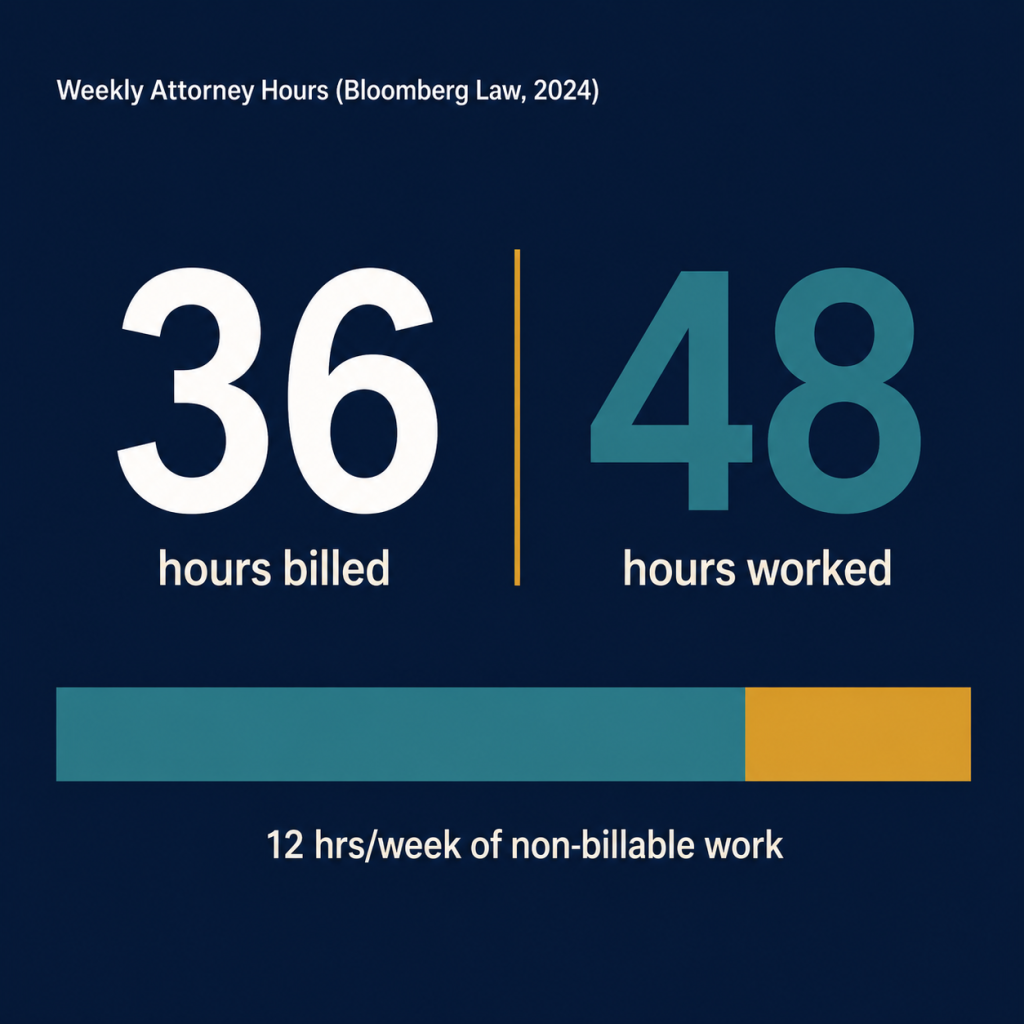
The scale of administrative work in law firms is well documented. In a Thomson Reuters survey of 400 law firm respondents, 74% said that spending too much time on administrative tasks was at least a moderate challenge. A separate Bloomberg Law workload survey from 2024 found that billable-hour attorneys billed an average of 36 hours per week while reporting 48 total hours worked. That 12-hour gap reflects how much non-billable work fills every legal professional’s day.
For personal injury practices specifically, the burden concentrates around a few predictable bottlenecks:
- Medical records and billing. PI cases generate enormous volumes of medical documentation. The ABA has noted that PI medical documentation often runs into thousands of pages, making manual review one of the most time-consuming tasks in any law firm.
- Document drafting. Demand letters, provider correspondence, discovery responses, and pleadings all follow predictable patterns but still require significant assembly time.
- Case file management. PI files sprawl across treatment records, bills, liens, insurer correspondence, photographs, intake notes, provider letters, deposition transcripts, and expert materials. Finding what the firm already has is a recurring time sink.
- Coordination and follow-up. Scheduling depositions, tracking provider responses, managing deadlines, and maintaining communication with clients and third parties.
The administrative burden in PI work is not a sign that paralegals are doing trivial work. These are skilled professionals whose core expertise is being consumed by tasks that are more about volume than judgment. The core facts of a personal injury case live inside messy, voluminous records, and someone has to extract, organize, and make sense of that information before the attorney can use it. The question worth asking is whether all of that extraction and organization needs to be done by hand.
Medical Records Processing: From Days to Minutes
Medical records processing is the single clearest fit between AI and PI paralegal work. It is also where the time savings are most dramatic.
In a typical PI case, the paralegal’s job after records arrive includes:
- Reading through every page of treatment records from every provider
- Building a chronological treatment timeline
- Creating medical billing summaries organized by provider and date
- Extracting CPT and ICD codes from billing records
- Identifying gaps in treatment
- Flagging pre-existing conditions relevant to causation
- Noting prior or subsequent injuries
- Summarizing severity, prognosis, and future care needs
When medical documentation runs into thousands of pages, this work can take days per case. Multiply that across a caseload of dozens or hundreds of active files, and medical records processing dominates paralegal time in PI practices for obvious reasons.
AI changes the workflow by producing a first-pass version of each of these outputs, with citations to source records. Instead of the paralegal reading every page and manually re-typing information into a chronology or billing summary, the AI processes the records and generates structured outputs that the paralegal then reviews, corrects, and supplements.
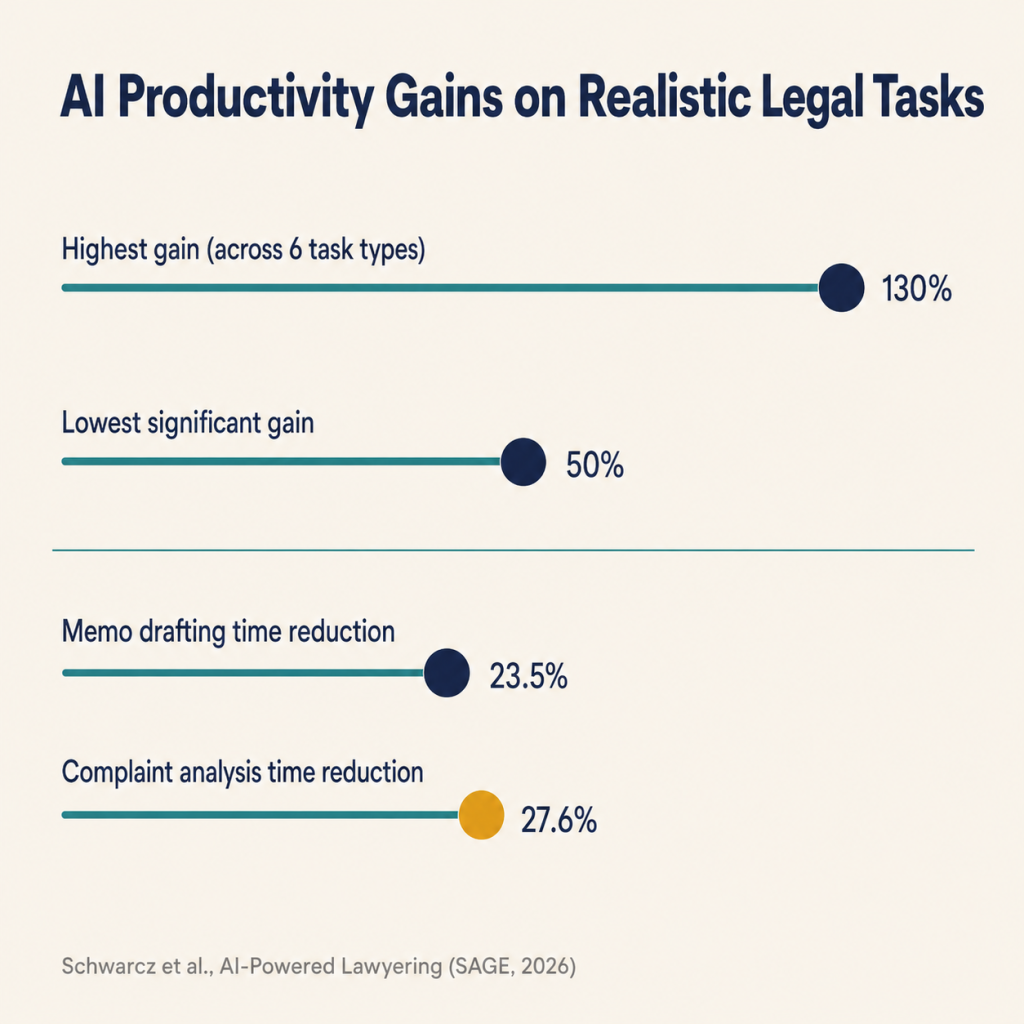
A 2026 peer-reviewed study published in SAGE journals tested modern AI tools on realistic legal tasks and found productivity improvements ranging from 50% to 130% across five of six task types, with particularly strong gains on litigation-oriented work. The study also found time reductions of roughly 23.5% on legal memo drafting and 27.6% on complaint analysis. Those measurements were not specific to medical record summaries, but the underlying logic applies: AI compresses the first-pass synthesis work, and human reviewers verify the output against the source material.
The paralegal still owns the verification. That means confirming the chronology is accurate, catching records that were misfiled or incomplete, identifying treatment gaps that matter for case value, and flagging inconsistencies that could affect causation arguments. That verification work requires case knowledge and experience that AI does not have.
DocuLex processes medical records on a visit-by-visit basis and generates billing summaries and patient visit reports from the source files. This structured, small-piece approach to processing is how we address the reliability concern that every paralegal rightfully has about trusting AI output. When the system analyzes records in manageable segments rather than trying to process an entire file at once, the results are easier for the reviewing paralegal to verify against the originals.
One important caveat: AI reduces the burden after records arrive, but it does not eliminate the external delay of waiting on providers. Under HIPAA’s right-of-access rules, providers generally have up to 30 days to respond to a records request. That waiting period is a case-management problem, not a document-processing problem, and no AI tool changes it.
Document Drafting: Demand Letters, Correspondence, and Discovery Responses
Document drafting is the second major category of PI paralegal administrative work where AI is making a measurable difference.
The same SAGE-published study found that AI access improved overall quality on at least four of six realistic legal assignments, with especially strong gains on complaint analysis and persuasive letter drafting. The researchers observed broad improvements in clarity, organization, and professionalism in AI-assisted work.
For PI paralegals, this translates to a concrete workflow shift across several document types:
| Document Type | Traditional Workflow | AI-Assisted Workflow |
| Demand letters | Paralegal assembles facts from records, bills, and case notes; drafts from scratch or heavily modifies a template | AI generates a first draft populated with case-specific data; paralegal verifies facts, checks damages figures, and tailors tone to attorney strategy |
| Provider correspondence | Paralegal writes individual letters requesting records, authorizations, or lien information | AI drafts standardized correspondence with case-specific details pre-populated; paralegal reviews and sends |
| Discovery responses | Paralegal manually matches interrogatories to case facts and drafts response language | AI produces first-pass responses based on indexed case materials; paralegal verifies accuracy and completeness |
| Pleadings | Paralegal drafts or assembles from templates, manually inserting case-specific facts | AI generates drafts with auto-populated case data; paralegal checks for accuracy and jurisdictional requirements |
The paralegal’s role shifts from assembling the first draft to quality-controlling and refining it. That shift matters because the judgment calls in PI drafting, such as whether a demand letter’s tone should be aggressive or conciliatory, whether a discovery response needs to be supplemented, or whether a particular medical fact strengthens or weakens the case, are decisions that require litigation experience.
The National Association of Legal Assistants (NALA) has reflected this shift in its own professional development programming, which now covers responsible use of AI for drafting, research, and document work, while emphasizing confidentiality and the continued need for human judgment.
DocuLex’s document generation tools work from this same model. The AI pulls from the case file to produce a draft, and the paralegal or attorney reviews, edits, and finalizes. The system works from the organized case materials already in the platform, which is what makes the output specific enough to be useful rather than generic.
Case File Organization, Search, and Evidence Retrieval
PI case files tend to accumulate material from a wide range of sources: treatment records, imaging reports, billing statements, lien notices, insurer correspondence, photographs, intake questionnaires, police reports, witness statements, deposition transcripts, and expert reports. Keeping all of that organized and findable is a constant background task for paralegals.
The Bureau of Labor Statistics lists gathering, organizing, and maintaining legal documents as core paralegal work. In practice, that means PI paralegals spend significant time filing new documents, naming files consistently, cross-referencing materials across providers, and searching for specific information when the attorney needs it.
AI addresses this in two ways:
- Automated tagging and categorization. When documents are uploaded to an AI-powered litigation file management system, the system automatically categorizes, tags, and indexes the contents. This eliminates the manual sorting step and makes the entire file searchable from the moment documents enter the system.
- Natural language search across case materials. Instead of opening folders and scanning file names, the paralegal can ask a question and get answers drawn from the actual content of the case file. A legal AI chatbot connected to the case database can retrieve specific facts, dates, provider names, or treatment details without the paralegal needing to remember which document contains the information.
The practical impact is reducing one of the least visible but most expensive problems in PI practice: time lost hunting for information the firm already has. When a new set of records arrives from a provider and needs to be reconciled with existing treatment timelines and billing summaries, the difference between a searchable, indexed file and a manually organized folder structure can mean hours per case.
Will AI Replace Personal Injury Paralegals?
This is the question underneath every article about AI and legal work, and it deserves a direct answer: no.
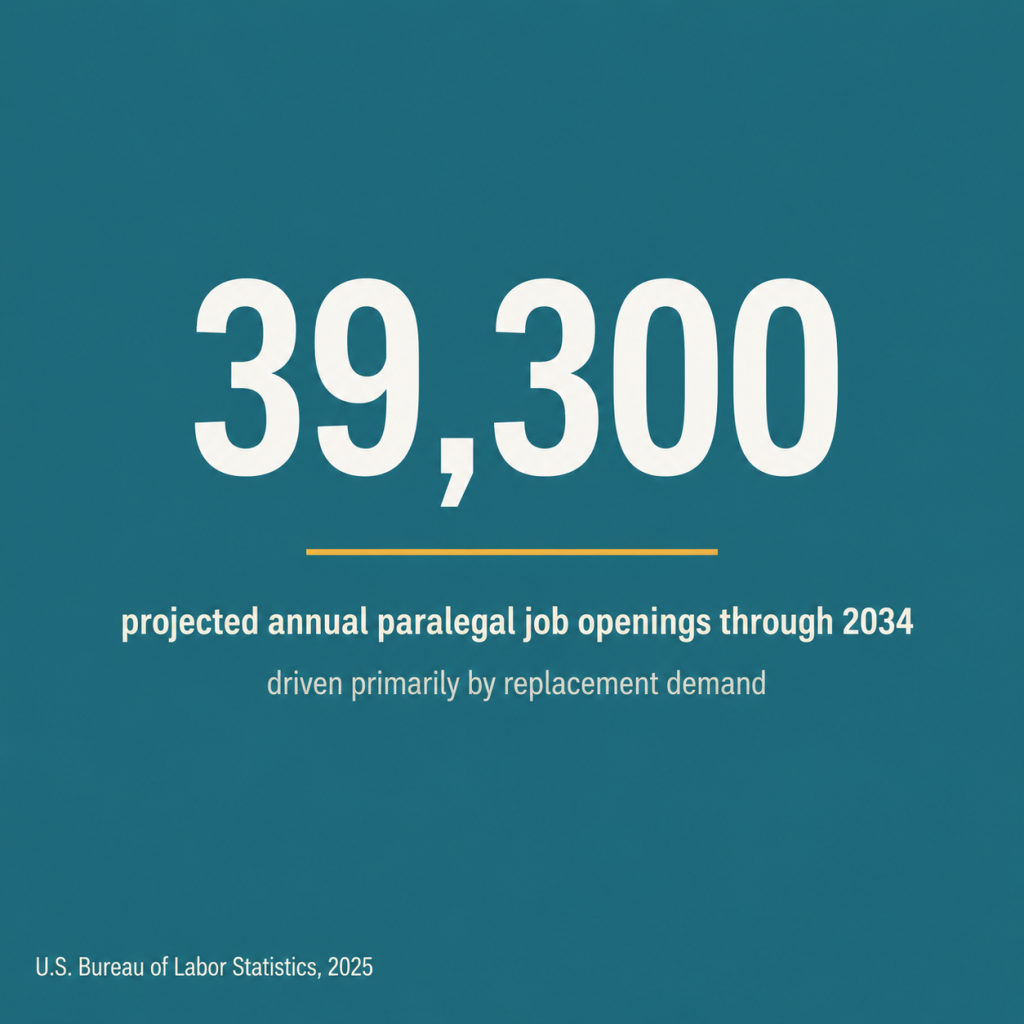
The Bureau of Labor Statistics projects roughly 39,300 paralegal and legal assistant job openings per year on average through 2034, driven primarily by replacement demand. BLS explicitly notes that AI is expected to make paralegals more efficient at tasks such as research and document preparation, not eliminate the positions.
NALA’s 2025 guidance on paralegal competencies states that the profession now requires “digital fluency and business savvy” as legal teams adopt AI, automation, and analytics. NALA’s separate AI guide goes further: AI is pushing the role toward higher-value tasks that require critical thinking, empathy, and personalized client service.
In PI practices specifically, the shift looks like this:
| Before AI | After AI |
| Paralegal manually builds chronologies page by page | Paralegal verifies AI-generated chronologies against source records |
| Paralegal re-types billing data into summary format | Paralegal reviews AI-extracted billing summaries for accuracy and completeness |
| Paralegal searches folders for specific documents | Paralegal queries an indexed case database and gets instant results |
| Paralegal drafts correspondence and discovery responses from scratch | Paralegal reviews and refines AI-generated first drafts |
| Paralegal spends most time on data entry and formatting | Paralegal spends most time on verification, issue-spotting, and case coordination |
The pattern across every task is the same: AI handles the repetitive data processing, and the paralegal handles the parts of the job that require experience, judgment, and context. In our experience, paralegals who work with AI paralegal tools describe the shift as moving from data entry to case intelligence. Less time formatting information, more time understanding it.
The peer-reviewed research supports this framing. The SAGE study found evidence that AI access can “raise the floor,” helping lower-performing users more than top performers. In a PI firm, that means AI can make workflows more consistent across staff levels. But it does not eliminate the need for experienced reviewers who know what a defensible chronology, a coherent damages narrative, or a properly scoped discovery response looks like.
Ethics, Compliance, and PHI: What PI Firms Need to Get Right
Adopting AI for paralegal workflows brings real ethical and compliance requirements that PI firms need to address before implementation, not after.
Ethical Obligations
The ABA’s Formal Opinion 512 confirms that existing rules on competency, informed consent, confidentiality, and fees apply to attorneys’ use of generative AI. Multiple state bars have issued similar guidance:
- Florida Bar Ethics Opinion 24-1 requires lawyers using generative AI to protect confidentiality, provide competent services, avoid improper billing, and comply with advertising rules.
- DC Bar Ethics Opinion 388 states that technological advances do not change lawyers’ fundamental duties to clients and courts.
- California’s 2026 proposed rule commentary emphasizes independent review, verification, and professional judgment over AI-generated output.
The consistent message: AI does not transfer professional responsibility. Every AI-generated output must be reviewed by a qualified human before it is filed, relied upon, or sent to a client or opposing party. For paralegals, this means the verification step is not optional. It is a professional obligation that flows from the supervising attorney’s ethical duties.
HIPAA and Protected Health Information
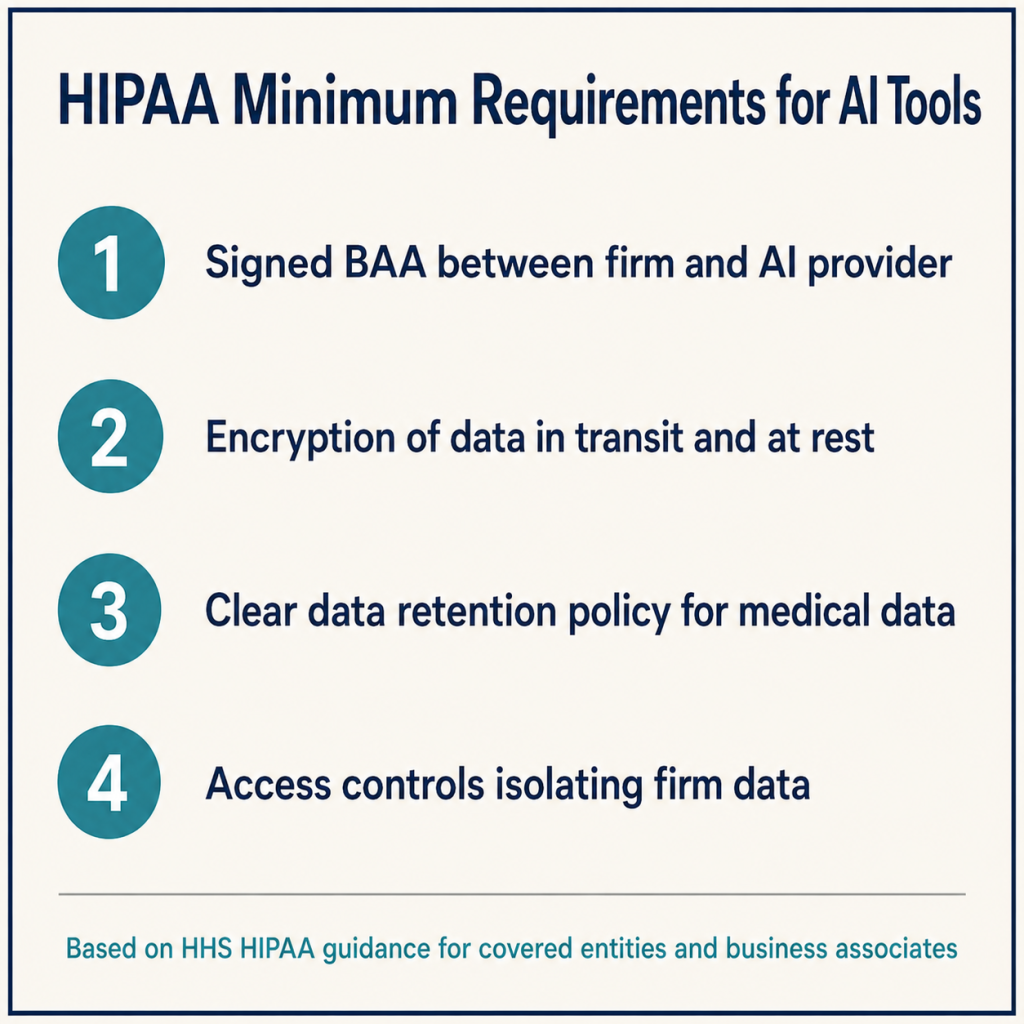
PI firms handle medical records daily, which means any AI tool processing those records must satisfy HIPAA requirements. HHS guidance requires covered entities to have a written business associate agreement (BAA) when a business associate handles protected health information on their behalf, and specifically states that cloud service providers processing ePHI must operate under a HIPAA-compliant BAA.
When evaluating AI tools for PI paralegal workflows, the minimum compliance requirements include:
- A signed BAA between the firm and the AI provider
- Encryption of data in transit and at rest
- A clear data retention policy (specifically whether medical data is retained after processing)
- Access controls that isolate firm data from other users
DocuLex is fully HIPAA compliant, operates on AWS with SSE-KMS encryption, and maintains a Business Associate Agreement with OpenAI that includes a no-data-retention policy for medical information processed through the platform. For PI firms where paralegals handle medical records as part of their daily workflow, those compliance features are baseline requirements for any AI tool that touches PHI.
Training and Governance
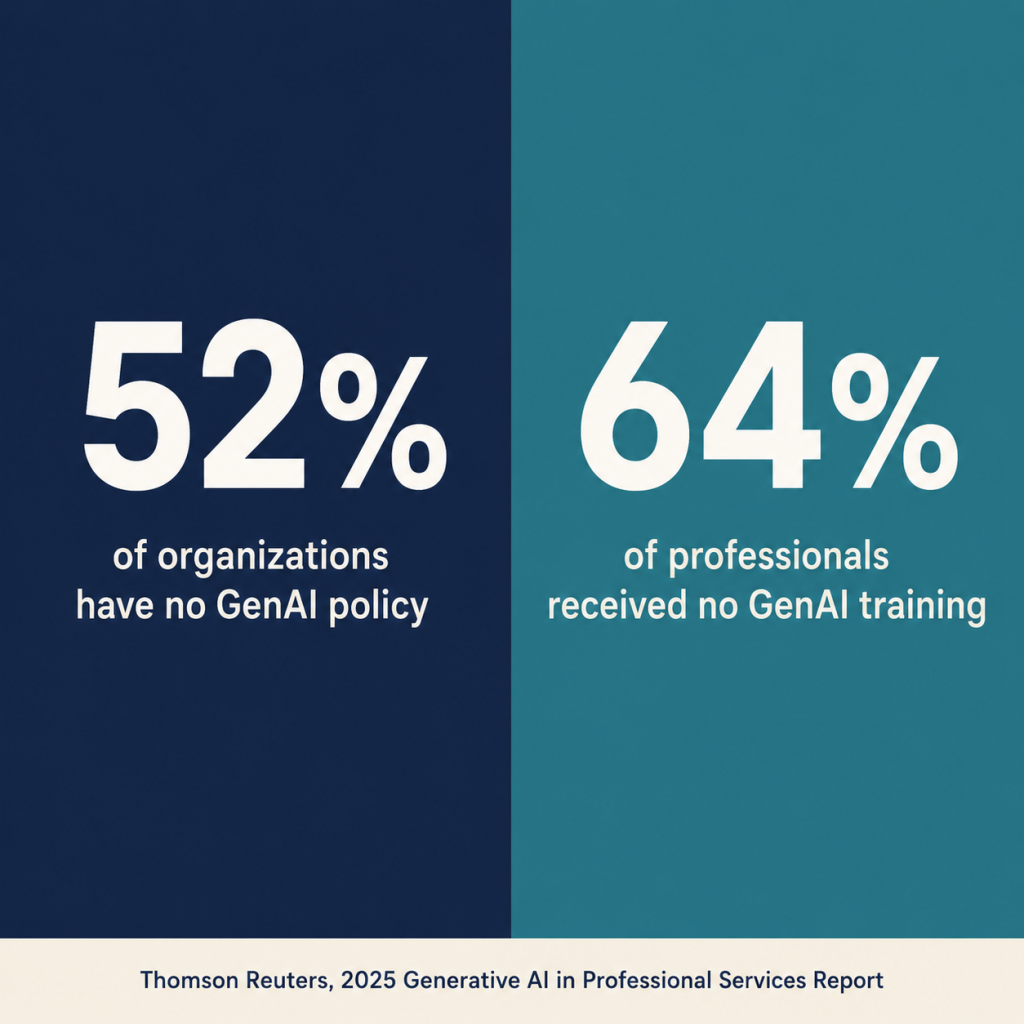
The Thomson Reuters 2025 report on generative AI in professional services found that while roughly half of professionals were already using generative AI, 52% of organizations had no GenAI policy and 64% of professionals had received no GenAI training. That gap between adoption and governance is a real risk for PI firms, where the consequences of mishandled medical records or inaccurate legal documents are significant.
Buying the software is only part of the equation. The workflow change sticks when the firm trains paralegals on:
- How to validate AI-generated outputs against source materials
- What types of tasks are appropriate for AI assistance and which are not
- Confidentiality boundaries when using AI tools
- When and how to escalate issues to the supervising attorney
How to Evaluate AI Tools for PI Paralegal Workflows
Not all AI tools are built for the specific demands of personal injury practice. When evaluating options, PI firms should consider how well each tool addresses the actual tasks their paralegals perform daily.
| Evaluation Criteria | What to Look For |
| Medical records processing | Can the tool process records visit-by-visit and generate chronologies, billing summaries, and treatment gap analyses? |
| Case file integration | Does the tool work from the firm’s actual case files, or does it operate in isolation from case data? |
| Document generation | Can it draft demand letters, correspondence, and discovery responses populated with case-specific information? |
| Search and retrieval | Can paralegals search across all case materials using natural language rather than file names? |
| HIPAA compliance | Does the provider offer a signed BAA, encryption, and a clear data retention policy for medical information? |
| AI reliability approach | How does the tool handle the risk of AI errors? Does it process information in structured segments, or attempt to analyze entire files at once? |
| Human review workflow | Is the tool designed to produce outputs that a paralegal can verify against source materials, or does it present conclusions without traceability? |
The strongest tools for PI work are those built specifically for litigation workflows, grounded in the case file, and designed to make human verification straightforward. Generic AI chatbots may be useful for general research, but they lack the case integration, compliance infrastructure, and structured processing that PI paralegal work requires.
Getting Started with AI in Your PI Practice
If your firm is evaluating AI tools to reduce administrative burden on your paralegal team, DocuLex.ai was built for exactly this situation. Our platform combines AI-powered document generation, medical records processing, intelligent case file management, and a legal AI assistant in a single HIPAA-compliant system designed for litigation attorneys and their staff.
We built DocuLex because we saw what PI paralegals deal with every day in our own practice, and we knew the technology existed to handle the parts of the job that were eating up their time without requiring their expertise. Join the waitlist to see how the platform works for your team.